

Introduction
Tech companies live and die by perception. You can build the fastest API, the smartest AI model, or the cleanest SaaS dashboard on the market — but if nobody trusts you, nobody buys from you. That’s the uncomfortable truth a lot of founders learn the hard way, usually after burning six figures on paid ads that stopped working the moment the budget did.
A tech PR agency solves a different problem than marketing does. Marketing gets people to click. PR gets people to believe. And in a year where AI search tools like Google AI Overviews, ChatGPT, and Perplexity are increasingly deciding which brands even get mentioned in an answer, public relations has quietly become one of the most important SEO and AI-visibility levers a technology company has.
This article breaks down why PR matters for tech businesses, how it protects reputation during a crisis, how it fuels funding and hiring, and — something most articles on this topic skip entirely — how earned media is now feeding directly into how AI models decide what to cite when someone asks “what’s the best [category] tool” in ChatGPT or Gemini.
Establishing Credibility and Trust in an Overcrowded Market
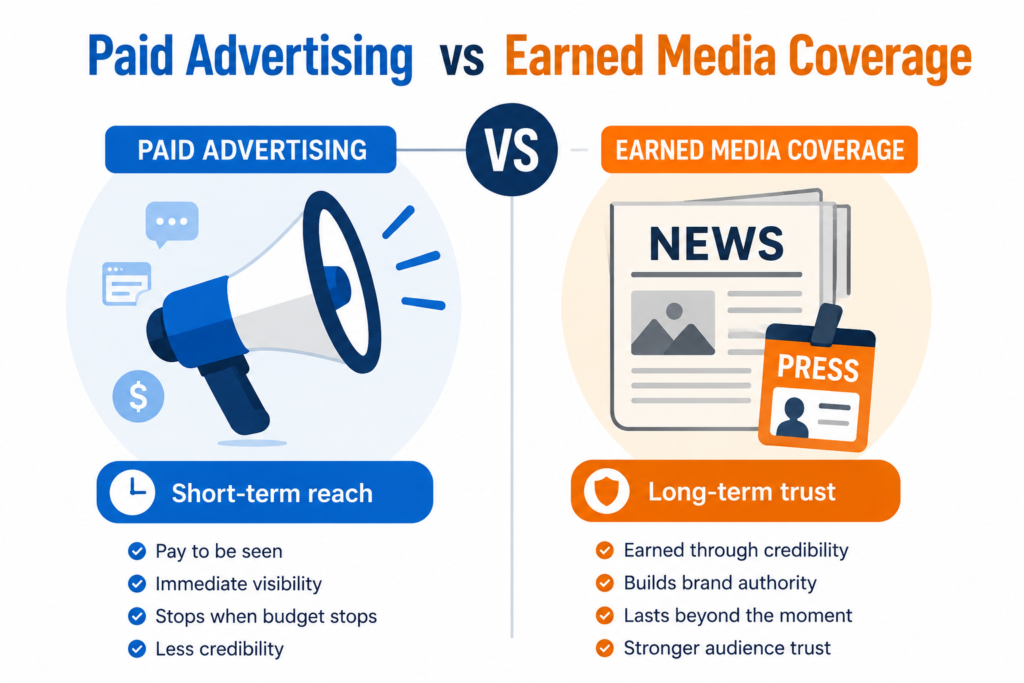
There are thousands of software platforms and hardware products competing for attention right now, and most buyers can’t tell them apart on features alone. When decision-makers are choosing between competing tools, they lean on trust signals — and third-party validation from journalists and industry publications carries far more weight than a company’s own claims about itself.
This is where a public relations strategy earns its keep. Coverage in respected outlets, combined with consistent thought leadership — bylined articles, executive interviews, data-backed whitepapers — positions leadership as genuine experts rather than salespeople. Buyers respond to that. Companies that show up consistently as credible voices in their space tend to close deals faster, attract higher-quality enterprise leads, and build a moat that pure ad spend can’t replicate.
Working with an experienced tech PR agency helps here because pitching journalists at outlets like TechCrunch, Wired, or The Verge requires understanding what those specific reporters actually want — not a generic press release blasted to 500 inboxes.
Strategies for Crisis Management and Reputation Safeguards
Tech companies are uniquely exposed to sudden reputational risk: outages, data breaches, algorithm bias controversies, and privacy complaints can all go viral within hours. Without a plan, a single bad news cycle can undo years of brand-building.
Building a Response Framework
A solid crisis PR framework usually includes:
- Pre-identified spokespeople who are media-trained and authorized to speak on the record
- Pre-drafted holding statements for common risk scenarios (outages, security incidents, layoffs)
- A single source of truth — usually a status page or newsroom — where updates are posted in real time
- A clear escalation chain so legal, comms, and leadership aren’t improvising during the crisis itself
Companies that respond quickly, transparently, and consistently tend to recover reputation faster than companies that go silent. Silence is almost always read as guilt, even when it isn’t.
Attracting Investors and Top-Tier Talent
Two of the hardest things for a growing tech company to secure are capital and great engineers — and PR influences both.
Investors rarely fund on code alone. They fund market opportunity, momentum, and leadership credibility. When funding rounds, partnerships, and revenue milestones get covered in the press, it signals stability to the venture community and makes a company more visible to angel investors and VCs who are actively scanning the market for their next check.
The same logic applies to hiring. Skilled engineers and executives research a company’s public reputation before accepting an offer — Glassdoor reviews, press coverage, and how a company handled its last controversy all factor into that decision. A consistent, positive media narrative becomes a recruiting asset, not just a marketing one.
Turning Complex Innovation Into Understandable Value
AI, cloud infrastructure, and data platforms are inherently technical, and that’s exactly where a lot of tech marketing fails — it talks to engineers instead of buyers. Overly technical messaging alienates the journalists, investors, and customers who care more about outcomes than architecture.
Good PR translates complexity into human stories: how a hospital cut wait times using a scheduling algorithm, how a small business saved 20 hours a month with automation, how a fintech app made budgeting less stressful. Case studies, customer testimonials, and relatable media coverage do more to move a buying decision than a spec sheet ever will.
Increasing Digital Visibility and Search Engine Performance
Earned media and SEO are more connected than most marketing teams realize. When a reputable outlet covers a company and links back to its site, that backlink is treated by Google as a trust signal, which can meaningfully improve rankings for competitive, industry-related search terms.
A well-run PR strategy should work hand-in-hand with a company’s SEO services so that media placements support the same target keywords the content team is already optimizing for. It also matters for brand search: when a prospective client types your company name into Google, a page full of credible, recent press coverage builds instant trust — while a thin or outdated search presence quietly raises doubt.
The New Frontier: PR’s Role in AI Overviews and Generative Search

Here’s the part most articles on tech PR still haven’t caught up to. Google AI Overviews, ChatGPT, Perplexity, and Gemini don’t just crawl a company’s own website when forming an answer — they lean heavily on third-party sources that already have authority: news coverage, review sites, comparison articles, and Reddit/forum discussions. This is often called Generative Engine Optimization (GEO).
Practically, that means:
- A company mentioned across several independent, high-authority publications is statistically more likely to be cited or recommended by an AI assistant than one that only markets itself
- PR placements that use consistent, factual language about what a product does (rather than vague marketing fluff) are easier for language models to extract and summarize accurately
- Being included in “best of” and comparison-style articles — a classic earned-media outcome — is one of the strongest predictors of showing up in AI-generated answers to buying questions
In short: PR used to be about getting in front of human readers and search engine crawlers. Now it’s also about getting cited by the AI models millions of people are starting their research with instead of Google. Companies that treat digital PR and AI visibility as separate workstreams are already behind.
Fueling Product Launches and Market Expansion
Launching a new feature or entering a new region needs momentum, and momentum doesn’t happen by accident. PR support for launches typically includes embargoed media briefings, early review-unit access for journalists, and a coordinated announcement across press, social, and owned channels.
Building anticipation before launch day — teasers, sneak previews, analyst briefings — consistently outperforms a single “we shipped it” announcement. And for companies expanding internationally, regionalized PR that accounts for local media habits and cultural context performs far better than a one-size-fits-all global press release. A strong visual identity across these campaigns also matters — companies working with a graphic design and branding team tend to get more consistent pickup because press kits, product imagery, and social assets all look cohesive and professional.
Personal Experience: What I’ve Learned Running Tech PR Campaigns
Over several product launches and one fairly rough security-incident disclosure, a few lessons kept repeating themselves.
First, journalists can tell within one sentence whether a pitch was written for them or copy-pasted to 200 other reporters. The pitches that actually landed coverage were the ones that referenced the reporter’s recent work and explained, in plain language, why their specific audience would care.
Second, the “quiet PR” mistake is real. Several early-stage founders I worked with treated PR as something to switch on only during a funding announcement. By the time they needed a journalist relationship — during a product recall scare — there was no existing trust to draw on, and outreach felt cold and desperate. Consistent, low-key visibility (a quarterly expert commentary piece, a data study, a founder interview) built up goodwill that paid off exactly when it mattered most.
Third, and this surprised me: the SEO impact of a single strong media placement often outlasted a month of paid search spend. One feature in an industry trade publication kept sending qualified organic traffic more than a year later, long after the campaign budget was gone. That’s the compounding value PR delivers that ads simply can’t.
Finally, transparency during a crisis is never regretted. In every case I’ve seen, companies that got ahead of a bad story with an honest statement recovered faster — and with less long-term reputational damage — than companies that tried to manage the narrative through silence or spin.
Common Mistakes Tech Companies Make With PR
- Treating PR as a one-time event instead of an ongoing relationship-building process
- Pitching too technical, too early — leading with jargon instead of the outcome
- No crisis plan until there’s a crisis — improvising under pressure rarely goes well
- Ignoring smaller trade and niche publications in favor of only chasing top-tier outlets
- Disconnecting PR from SEO and content strategy, missing the compounding search benefits of earned links
- Failing to track share of voice against competitors, so there’s no real measurement of PR impact
Best Practices for a Sustainable Tech PR Strategy
- Build a media list of journalists who actually cover your specific niche, not a generic mass list
- Publish original data or research — reporters love citable numbers, and so do AI models
- Keep a company newsroom or press page updated with recent coverage, executive bios, and boilerplate
- Align PR messaging with your SEO keyword strategy so earned coverage supports organic search too
- Prepare a basic crisis communication plan before you think you need one
- Measure results beyond vanity metrics — track referral traffic, keyword movement, and share of voice
Conclusion
Being a great technology company isn’t just about writing clean code or shipping fast — it’s about being understood, trusted, and remembered. A strong PR strategy is what turns technical achievement into market credibility, protects a brand when things go wrong, and increasingly, determines whether AI search tools even mention you when someone’s looking for a solution like yours.
Actionable takeaways:
- Start building media relationships before you need them, not during a crisis
- Connect your PR efforts to your SEO strategy for compounding organic growth
- Prepare a crisis communication plan now, while things are calm
- Prioritize earned coverage in outlets and comparison articles that AI search tools already trust
- Keep your company’s visual identity and newsroom presence consistent and professional
If you’re building out your company’s visibility strategy, Aisofting helps growing brands connect SEO, content, and digital branding into one coherent growth engine — the same foundation that makes PR efforts actually pay off in search.
Frequently Asked Questions
What is the difference between PR and marketing for tech companies?
Marketing focuses on short-term acquisition through paid channels and direct campaigns. PR focuses on long-term credibility, earned media, and thought leadership that compounds over time.
When should a tech startup start investing in PR?
As soon as there’s something newsworthy to say — a funding round, a meaningful product launch, or a senior hire — rather than waiting until the company “feels big enough.”
Does PR actually help SEO rankings?
Yes. Backlinks from credible news sites and industry publications are treated as trust signals by search engines and can meaningfully improve rankings for competitive terms.
How does PR affect visibility in AI tools like ChatGPT or Google AI Overviews?
AI assistants tend to pull from third-party sources with existing authority — news coverage, reviews, and comparison content — so consistent earned media increases the odds of being cited in AI-generated answers.
How do PR teams simplify highly technical products for the media?
They translate technical capability into outcome-focused stories — what the product does for the customer — working closely with engineers and product teams to keep accuracy intact while making the message accessible.
How is tech PR success measured?
Common metrics include media placements, share of voice versus competitors, referral traffic and keyword movement after coverage, and engagement from target stakeholders like investors or partners.
Is it worth hiring a PR agency instead of doing it in-house?
It depends on stage and budget — agencies bring existing journalist relationships and faster turnaround, while in-house teams build deeper product knowledge over time. Many companies use a hybrid of both.
What makes a tech PR pitch actually get a response from journalists?
Personalization, relevance to the reporter’s beat, and a clear, non-jargon explanation of why their audience should care — generic mass pitches are the single biggest reason pitches get ignored.