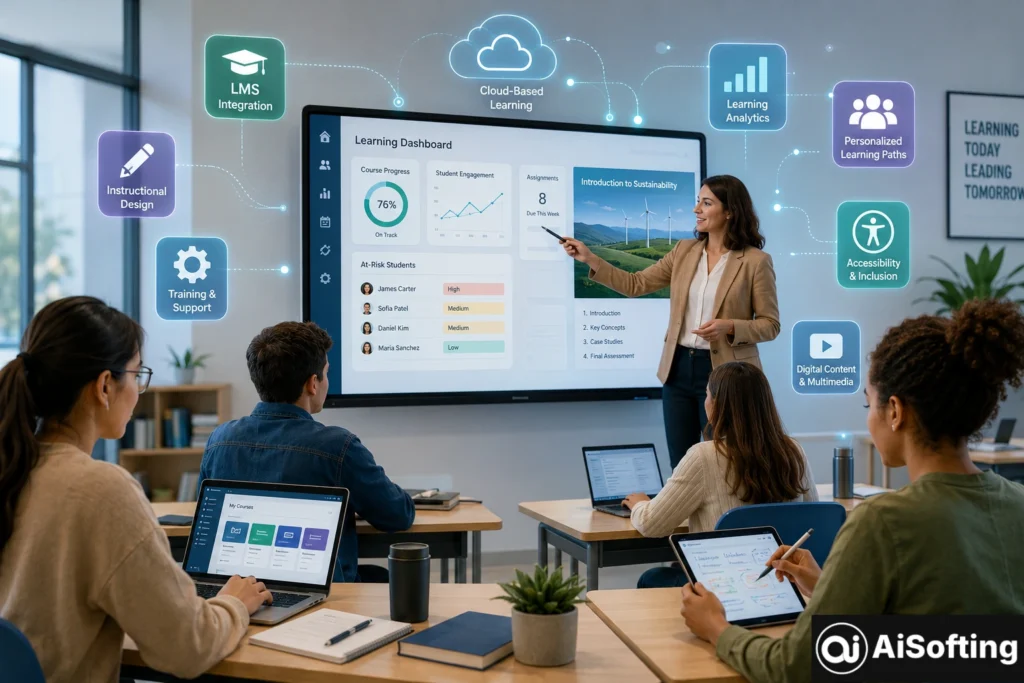
Walk into almost any classroom today — whether it’s a university lecture hall, a corporate training room, or a K–12 school in a mid-sized city — and you’ll notice something has quietly but fundamentally changed. The whiteboard hasn’t disappeared, but it now competes for attention with smart displays, learning management systems, AI-powered tutoring tools, and real-time analytics dashboards. That shift didn’t happen by accident. It happened because schools and organizations finally started investing seriously in instructional technology services.
For educators who lived through the transition from overhead projectors to interactive whiteboards, and then from static e-learning modules to adaptive learning platforms, the pace of change has been both exciting and occasionally overwhelming. Instructional technology services exist precisely to help bridge that gap — to make sure the tools actually serve the teaching, and not the other way around.
This article digs deep into what instructional technology services actually involve, why they matter more than ever, and what educators, administrators, and organizations can realistically expect when they commit to integrating them thoughtfully.
What Are Instructional Technology Services?
At their core, instructional technology services refer to the design, implementation, support, and evaluation of technology-based solutions that improve teaching, training, and learning outcomes. The term covers a wide spectrum — from one-time tool deployments to full-scale digital learning ecosystem design.
These services are typically provided by:
- In-house instructional technologists at universities or school districts
- Dedicated EdTech companies and consultants
- Learning & Development (L&D) departments within corporations
- Third-party vendors offering LMS platforms, content authoring tools, and curriculum design
The goal isn’t just to add technology — it’s to add technology purposefully. A strong instructional technology service provider will always start with learning objectives first, then identify the right tools to meet them.
Why Instructional Technology Services Matter Now More Than Ever
The COVID-19 pandemic accelerated a shift that was already underway. Schools and organizations that had been slowly experimenting with digital tools suddenly found themselves needing full remote learning capabilities overnight. Many struggled. Those who had already invested in robust instructional technology services adapted far more gracefully.
But this is not just a pandemic story. The workforce itself has changed. According to UNESCO’s 2023 Global Education Monitoring Report, hybrid learning environments are expected to remain common in higher education even as in-person instruction returns. Employers similarly report that employees now expect flexible, on-demand learning options — a demand that traditional instructor-led training alone cannot meet.
Instructional technology services help organizations answer these demands systematically rather than reactively.
Key Components of Effective Instructional Technology Services
1. Learning Management Systems (LMS) Implementation and Support
The LMS is the backbone of most digital learning environments. Platforms like Canvas, Blackboard, Moodle, Google Classroom, and D2L Brightspace serve different audiences and have different strengths. Choosing the right one requires a careful analysis of your users, technical infrastructure, and long-term goals.
Good instructional technology services don’t just install an LMS and walk away. They:
- Train faculty and staff on day-to-day use
- Configure the system to match institutional workflows
- Troubleshoot integration issues with other campus or enterprise tools
- Continuously evaluate whether the platform is meeting learning goals
2. Instructional Design and Curriculum Development
This is where technology meets pedagogy. Instructional designers work alongside subject matter experts (SMEs) to translate complex content into engaging, effective learning experiences — whether that’s an online module, a blended course, a simulation, or an interactive video.
They draw on frameworks like ADDIE (Analysis, Design, Development, Implementation, Evaluation), Bloom’s Taxonomy, and Universal Design for Learning (UDL) to structure content in ways that genuinely support learner comprehension and retention.
3. Faculty and Staff Training and Development
Even the best platform fails if the people using it aren’t confident or skilled. One of the most undervalued instructional technology services is professional development for educators themselves.
Effective programs don’t just teach button-clicking. They help teachers understand why a tool works, how to integrate it into their specific disciplinary context, and how to evaluate whether it’s actually improving student outcomes.
4. Accessibility and Inclusive Design
With increasing legal and ethical obligations around accessibility — particularly Section 508 compliance in the U.S. and WCAG 2.1/2.2 standards internationally — instructional technology services increasingly include accessibility audits, caption and transcript creation, and redesign of digital content to ensure all learners can participate fully.
This is not optional. It’s both the right thing to do and, in many contexts, legally required.
5. Data Analytics and Learning Assessment
Modern LMS platforms and educational tools generate enormous amounts of data. Instructional technology services now often include learning analytics — using that data to understand where students are struggling, which content is most effective, and how to intervene before learners fall through the cracks.
Tools like Civitas Learning, Brightspace Insights, and even built-in Canvas analytics are being used by institutions to make evidence-based decisions about curriculum, pacing, and support services.
Common Mistakes Organizations Make with Instructional Technology
Having observed many institutions go through technology adoptions, a few patterns of failure repeat themselves with frustrating regularity:
Buying tools before defining problems. A school purchases a shiny new AI tutoring platform before anyone has clearly articulated what learning challenge it’s meant to solve. Six months later, the tool sits unused.
Underinvesting in training. The budget goes to software licenses, with nothing left for professional development. Faculty who were never properly onboarded become critics rather than champions.
Ignoring accessibility from the start. Adding captions and redesigning navigation after content is built is expensive and time-consuming. Building accessibly from day one is far more efficient.
Treating technology as a substitute for pedagogy. No tool replaces thoughtful teaching. The best instructional technology services help educators enhance their approach, not abandon it.
Failing to evaluate outcomes. Implementing a tool without any plan to measure its impact means you’ll never know whether it worked — or how to improve it.
Best Practices for Integrating Instructional Technology Services
Here are practical recommendations based on what consistently works:
- Start with a needs assessment. Understand your learners, your instructors, and your technical environment before choosing anything.
- Pilot before scaling. Test new tools with a small cohort first. Gather real feedback. Iterate.
- Create a faculty champion network. Peer learning is powerful. Identify early adopters and empower them to support colleagues.
- Build a sustainable support structure. Instructional technologists should be ongoing partners, not one-time consultants.
- Document everything. Create clear guides, tutorials, and SOPs so institutional knowledge doesn’t walk out the door when staff turn over.
For deeper reading on instructional design best practices, the Association for Talent Development (ATD) offers extensive resources specifically for corporate L&D contexts, while the EDUCAUSE Learning Initiative focuses on higher education.
Personal Experience: What I’ve Seen on the Ground
I’ve spent years working adjacent to instructional technology teams — first as an educator trying to figure out why my students seemed disengaged with the online modules I’d spent weeks building, and later as someone who worked closely with instructional designers on curriculum overhaul projects for a mid-sized university.
The most valuable lesson I took from those years? The technology is almost never the problem. When digital learning fails, it’s almost always because of misalignment between the tool, the pedagogy, and the people expected to use it.
I remember one particular course redesign where the department had invested significantly in a new video lecture system. Faculty recorded beautiful, high-production-value lectures. Students watched very few of them. When we finally surveyed students, the feedback was consistent: the videos were too long, there was no way to take notes inside the platform, and they had no idea which parts would be assessed. Three weeks of instructional redesign — adding chapter markers, embedding comprehension checks, and creating accompanying study guides — transformed the engagement data entirely.
That experience shaped how I think about instructional technology services. The tools are only as good as the thinking that goes into deploying them. And that thinking — the careful, human, pedagogically-grounded work of aligning technology to learning goals — is exactly what good instructional technology services provide.
For more insights on how AI and digital tools are reshaping education and training, the team at Aisofting regularly explores practical EdTech applications worth following.
FAQs About Instructional Technology Services
What is the role of an instructional technologist?
An instructional technologist bridges the gap between education and technology. They work with teachers, trainers, or subject matter experts to design effective digital learning experiences, implement and support educational tools and platforms, and evaluate whether technology-based interventions are actually improving learning outcomes.
How do instructional technology services differ from IT support?
While IT support focuses on keeping systems running — managing hardware, networks, and software infrastructure — instructional technology services focus on learning. An instructional technologist cares about whether students are engaging, retaining, and applying what they’re learning, not just whether the LMS is online.
What qualifications should I look for when hiring instructional technology services?
Look for professionals with backgrounds in both education and technology. Certifications like the Certified Professional in Talent Development (CPTD) from ATD, a master’s degree in Instructional Design or Educational Technology, or demonstrated experience with major LMS platforms are all good signals. Portfolio work — actual courses or programs they’ve designed — matters more than credentials alone.
Are instructional technology services only for universities and schools?
Not at all. Corporate L&D departments, government agencies, healthcare organizations, and nonprofits all use instructional technology services extensively. Any organization that needs to train or educate people at scale can benefit from these services.
How much do instructional technology services cost?
Costs vary widely depending on scope. A single instructional designer working on a course redesign might charge $5,000–$25,000 for a full project. An enterprise LMS implementation with training and ongoing support can run into six figures. Many institutions hire full-time instructional technologists, with salaries in the U.S. typically ranging from $55,000 to $95,000 depending on experience and institutional size.
Conclusion: Technology in Service of Learning
Instructional technology services, at their best, are invisible. When they work well, learners don’t notice the technology — they just find that learning feels clearer, more engaging, and more effective. That invisibility is the goal.
As AI tools, adaptive learning platforms, and immersive technologies like AR and VR continue to mature, the role of instructional technology services will only grow more important. The institutions and organizations that invest in this function now — not just in software licenses, but in the human expertise to deploy them thoughtfully — are the ones that will adapt successfully to whatever the next shift looks like.
Actionable Takeaways:
- Before buying any new educational technology, complete a formal needs assessment.
- Budget for training and professional development at the same level you budget for tools.
- Make accessibility a design requirement, not an afterthought.
- Use learning analytics to evaluate impact and iterate continuously.
- Build a team or partnership with instructional technologists who understand both pedagogy and technology.
Disclaimer: This article is intended for informational purposes only and reflects general observations about instructional technology services. Individual results from implementing technology solutions will vary based on organizational context, resources, and execution. Readers should consult qualified instructional technology professionals before making significant investment decisions.