Introduction
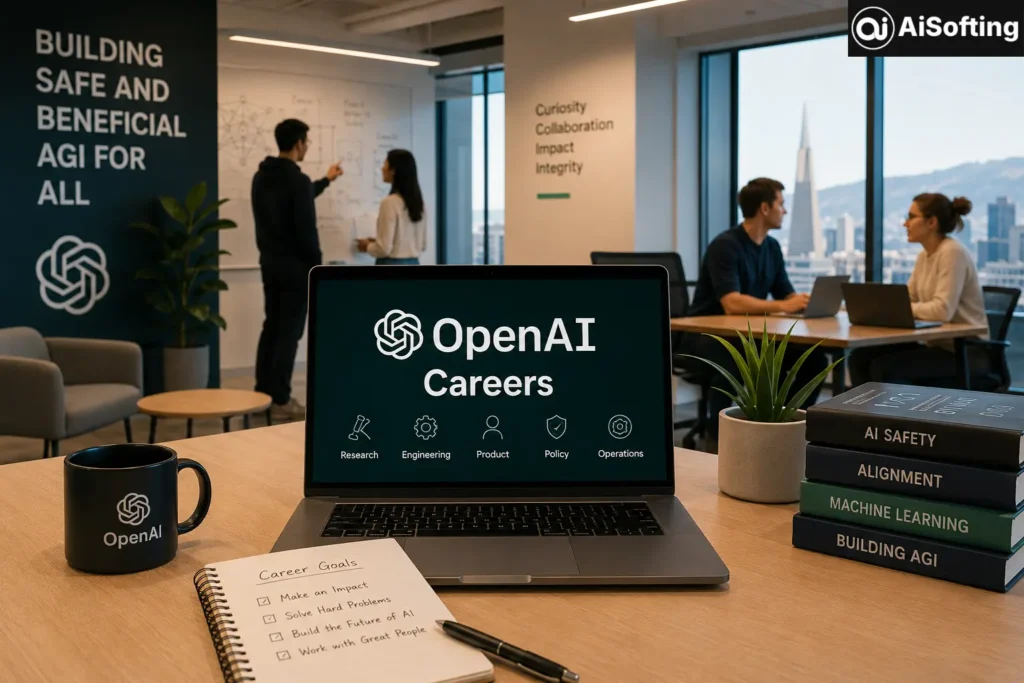
If you’ve spent any time on LinkedIn lately, you’ve probably noticed the same pattern: someone posts “Excited to share I’m joining OpenAI,” and the comments fill up with a mix of congratulations and quiet envy. OpenAI has become one of the most sought-after employers in tech, and honestly, it’s not hard to see why. You get to work on frontier AI models, the pay is competitive with the biggest names in Silicon Valley, and the mission — building AI that’s safe and genuinely useful — is the kind of thing that pulls in people who want their work to matter.
But here’s what doesn’t get said enough: getting an OpenAI job is genuinely difficult, and the process looks different depending on which team you’re targeting. This guide breaks down what OpenAI careers actually involve — the roles, the hiring process, the pay ranges, and the mistakes I’ve seen candidates make repeatedly. I’ve also added a personal experience section near the end, because reading about a hiring process in the abstract is very different from watching it play out.
What Kinds of Roles Does OpenAI Hire For?
A common misconception is that OpenAI only hires PhDs in machine learning. That’s not true anymore, if it ever fully was. The company’s careers page lists openings across a wide range of disciplines, and its hiring philosophy explicitly states that the company seeks talented people with diverse perspectives who are passionate about collaboratively building safe AGI for all of humanity.
In practice, that translates into a handful of broad job families:
Research and Applied Engineering
This is the technical core — research scientists working on model capabilities, alignment, and safety, alongside research engineers and applied engineers who turn research into shipped products like ChatGPT.
Software Engineering and Infrastructure
Backend engineers, infrastructure specialists, and platform teams who keep OpenAI’s systems running at a scale most companies never have to deal with. Recent postings have included roles like engineering manager for core experimentation and forward-deployed engineering positions in cities such as Zurich, Stockholm, and Madrid.
Product, Design, and Growth
Product managers, UX designers, and growth leads shape how tools like ChatGPT actually feel to use. These roles increasingly overlap with go-to-market functions, including B2B marketing and partnerships.
Policy, Safety, and Trust
As AI regulation tightens globally, OpenAI has expanded hiring in policy research, national security evaluation, and trust and safety — a sign that non-technical, governance-focused careers are becoming just as central to the company as engineering.
Business, Finance, and Operations
Treasury, strategic finance, ESG reporting, and internal communications roles show that OpenAI now runs like a large enterprise, not just a research lab.
Entry-Level and Emerging Talent
OpenAI also runs a dedicated emerging talent program aimed at people with zero to three years of experience, spanning research, applied engineering, and product — a path specifically for recent graduates and self-taught candidates who don’t have a long resume yet.
The OpenAI Hiring Process, Step by Step
According to OpenAI’s own published interview guide, the process is built around consistency: every candidate should go through a comparable set of stages so they have a fair shot to demonstrate their strengths. The company also states plainly that it isn’t credential-obsessed — it’s more interested in what you can actually contribute than which university you attended.
Here’s roughly what candidates report going through:
- Application and resume review. Submitted applications typically get a response within about a week if there’s a fit.
- Recruiter or hiring manager screen. This is often a real behavioral interview, not a casual chat — expect questions about a major failure, a conflict you navigated, and your motivation for choosing OpenAI specifically.
- Technical or role-specific assessment. Software engineers usually face a coding round plus a scale-focused system design interview. Data scientists often get a take-home A/B testing case study followed by a live walkthrough. Research roles carry the heaviest technical bar, often touching graduate-level machine learning theory.
- Final loop / onsite rounds. Multiple back-to-back interviews, sometimes four or more in a single day, covering technical depth, collaboration style, and culture fit.
- Team matching and leveling. Interestingly, which team you’ll join and what level you’re offered is often decided at the very end of the process rather than upfront.
- Offer and reference checks. References typically come into play only once an offer is being finalized.
Glassdoor data collected from candidate-submitted interviews puts the average hiring timeline at roughly a month, though this varies enormously by role — some technical support positions have closed in a single day, while niche policy research roles have stretched past a year in rare cases. Independent interview-prep resources like IGotAnOffer similarly report a typical range of two to four weeks from first contact to decision, with five to seven total interview rounds being common.
📌 Straight from the source: For the most current, official version of this process, always cross-check with OpenAI’s own interview guide. Third-party breakdowns (including this one) are useful for context, but OpenAI’s page is the one place guaranteed to reflect their latest process.
A Few Hiring Quirks Worth Knowing
- There isn’t a standardized interviewer question bank, so the tone and difficulty of a technical round can vary a lot depending on who’s on the other side of the call.
- Senior and staff-level candidates frequently go through the same interview loop as more junior applicants, with seniority decided afterward based on performance.
- OpenAI does sponsor work visas, including H-1B, for qualified international candidates.
How Much Do OpenAI Jobs Pay?
Compensation at OpenAI is generally considered strong even by AI-industry standards. Broad estimates place entry-level roles like research assistants or early-career software engineers starting around $100,000 annually, with senior machine learning engineers and researchers reportedly reaching into the $400,000–$700,000+ range at the top end, according to compensation data aggregated from current and former employees. Total compensation packages typically include a base salary, equity or profit-participation units, health insurance, and other standard tech-industry perks.
Keep in mind that these figures shift quickly in a fast-moving industry — always check current listings and recent compensation reports rather than relying on numbers from even a year ago.
Benefits and Culture at OpenAI
Beyond salary, people who’ve worked there describe a culture that leans heavily into ownership and speed. Teams are relatively lean for a company of OpenAI’s profile, which means individual contributors often have outsized influence on shipped products. Common benefits mentioned across job postings and employee reviews include:
- Competitive equity or PPU (profit participation unit) grants
- Comprehensive health, dental, and vision coverage
- Flexible or hybrid work arrangements depending on team and location
- Relocation and visa sponsorship support for international hires
- Access to cutting-edge compute resources and internal tools
Common Mistakes Candidates Make
After watching (and helping) a number of people go through AI-industry hiring processes, a few mistakes come up again and again:
- Treating the resume screen casually. Like most FAANG-adjacent companies, the vast majority of applicants don’t make it past this stage. Vague bullet points without measurable impact rarely survive.
- Underestimating the behavioral round. Candidates often prepare heavily for technical rounds and walk into recruiter screens unprepared, not realizing these can be full behavioral interviews.
- Not tailoring answers to the specific team. OpenAI’s mission-driven culture means interviewers often probe why you want to work there specifically, not just why you want to work in AI generally.
- Ignoring the culture round. Several candidates have described culture interviews as being taken extremely seriously, sometimes more seriously than the technical bar itself.
- Applying without reading recent updates. OpenAI moves fast. Referencing outdated product information or old company positions during an interview is an easy way to signal disengagement.
Best Practices for Applying to OpenAI
- Quantify your impact. Numbers — users served, latency improved, systems scaled — carry more weight than descriptive job titles.
- Prepare polished stories, not just facts. Behavioral rounds want structured narratives (situation, action, result), not a recited resume.
- Read recent company updates before every interview. OpenAI’s blog and recent press coverage are the fastest way to sound current and genuinely engaged.
- Apply early when a role opens. Recruiters often review applications in the order they arrive, so early applicants can get more attention.
- Be honest about your experience level. OpenAI explicitly welcomes people with high potential rather than only fully credentialed experts, so don’t disqualify yourself prematurely.
Personal Experience: What I’ve Learned Watching People Go Through This
I’ve coached and spoken with a handful of candidates who went through OpenAI’s process over the past year or so, across engineering, product, and policy-adjacent roles, and a few patterns stood out to me that I don’t see mentioned often enough.
The first thing that surprised almost everyone was how early the behavioral questions show up. People expect a warm-up call and instead get asked, thirty minutes in, to walk through their biggest professional failure in detail. One candidate I spoke with, applying for a product role, told me their very first screening call spent half the time on a hypothetical case question about improving new-user onboarding for ChatGPT. That’s not typical for a first call at most companies, and candidates who treat it as a casual intro conversation tend to underperform.
The second pattern is how much the final leveling decision can shift after the loop. I watched one engineer go in expecting a mid-level offer based on the job posting, only to be told afterward that OpenAI often places candidates a level below their current title at other companies — sometimes two levels below for senior titles. That’s not a dealbreaker, but it’s worth knowing going in so you’re not blindsided during offer negotiations.
Lastly, the culture interview deserves more respect than most candidates give it. More than one person told me they walked out of their technical rounds feeling confident, only to get rejected without explanation after the culture round. My honest takeaway: don’t treat mission alignment as a box to check. Interviewers can tell the difference between someone who’s read the company blog the night before and someone who’s actually internalized what OpenAI is trying to build.
If there’s one lesson from all of this, it’s that OpenAI’s hiring bar isn’t just technical — it’s philosophical. They want to know you actually care about the “why,” not just the “how.”
Frequently Asked Questions
Is it hard to get a job at OpenAI?
Yes. Most publicly available data suggests the vast majority of applicants don’t get past the initial resume screen, and the overall process is comparable in difficulty to other top-tier tech companies, with an added emphasis on mission and culture alignment.
Does OpenAI hire people without a machine learning background?
Yes. While research roles favor advanced degrees in machine learning or related fields, OpenAI also hires extensively for product, design, policy, finance, operations, and entry-level positions that don’t require a specialized AI background.
How long does the OpenAI interview process take?
Estimates vary, but most sources report somewhere between two weeks and two months from application to offer, depending on the role and how quickly interviews can be scheduled.
Does OpenAI sponsor visas for international applicants?
Yes, OpenAI has a documented history of sponsoring work visas, including H-1B petitions, for qualified candidates outside the United States.
What’s the average salary at OpenAI?
Compensation varies widely by role and seniority, with entry-level positions often starting around $100,000 and senior technical roles reportedly reaching well into six figures beyond that, plus equity and benefits.
What does OpenAI look for in candidates?
Based on the company’s own hiring guidance, OpenAI prioritizes demonstrated ability and potential over formal credentials, along with collaboration, clear communication, and genuine alignment with its mission.
Are OpenAI jobs remote-friendly?
It depends on the role. Many positions are listed as hybrid, based primarily out of San Francisco, though the company has also posted remote and international roles in locations like India, Zurich, Stockholm, and Madrid.
Conclusion and Actionable Takeaways
OpenAI careers sit at a genuinely interesting intersection right now — high compensation, high-impact work, and a hiring bar that rewards substance over polish. If you’re considering applying, treat the process as seriously as you would any other top-tier tech interview, but don’t underestimate the weight OpenAI places on cultural and mission alignment.
A few final takeaways:
- Review the official careers page regularly, since new roles open frequently and early applicants tend to get more attention.
- Prepare for behavioral questions from the very first call, not just the final loop.
- Quantify your past impact wherever possible, especially for engineering and technical roles.
- Don’t assume you need a PhD — OpenAI hires broadly across research, product, policy, and operations.
- Go in genuinely prepared to explain why OpenAI, specifically, matters to you — not just AI in general.
Looking for more AI news, guides, and technology insights? Visit Aisofting for the latest articles and updates.
Disclaimer: This article is intended for general informational purposes only and reflects publicly available data, candidate-reported experiences, and third-party sources as of mid-2026. Hiring processes, compensation figures, and job openings at OpenAI can change at any time, so readers should verify current details directly through OpenAI’s official careers page before applying. This content is not affiliated with or endorsed by OpenAI, and it should not be treated as a guarantee of employment outcomes or exact compensation