Introduction
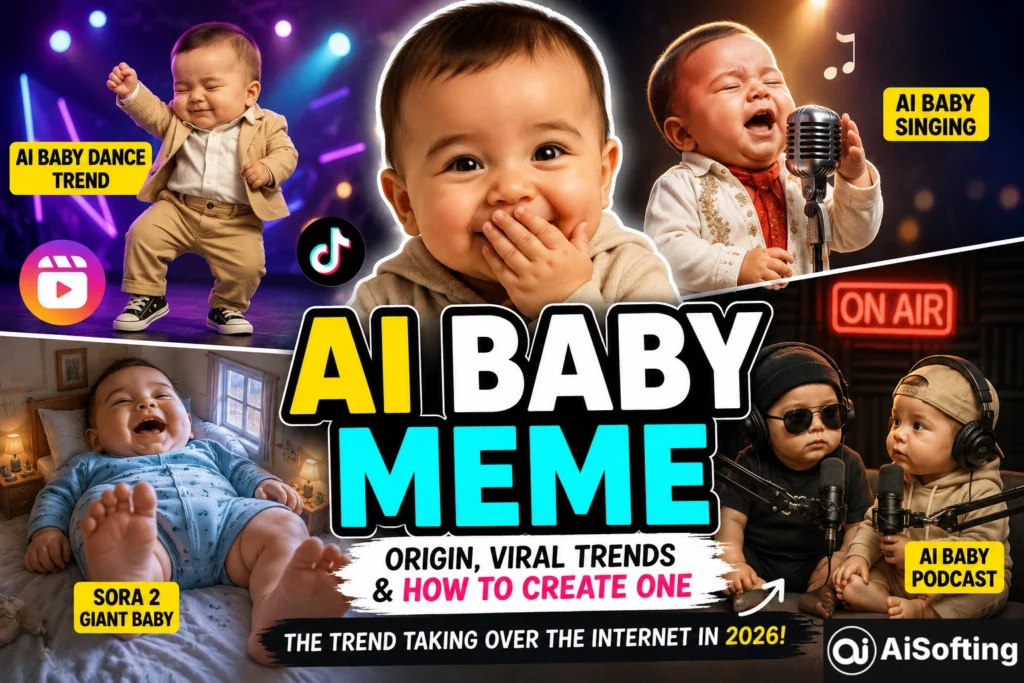
If your For You Page has turned into an endless scroll of oddly expressive infants dancing, singing throwback love songs, or hosting fake podcasts, you’re not imagining things. The AI baby meme has become one of the strangest and most persistent trends of 2026, spawning dozens of spin-offs across TikTok, Instagram Reels, and X. What started as a single rotoscoped clip of a baby covering its mouth mid-laugh has snowballed into an entire genre of AI-generated infant content, complete with dance challenges, lip-synced comedy, and hyper-realistic video generators like Sora 2 producing babies the size of buildings.
This article breaks down where the AI baby meme actually came from, why it keeps mutating into new formats, how creators are making these clips, and what to watch out for if you want to jump on the trend yourself. I’ll also share some hands-on observations from testing a few of these tools and templates, plus answer the most common questions people are searching right now.
What Is the AI Baby Meme?
The “AI baby meme” isn’t one single meme — it’s an umbrella term for a family of viral trends that use AI video tools to animate baby faces, bodies, or voices in ways real babies obviously can’t do. The common thread is the uncanny contrast between something innocent (a baby) and something absurd, emotional, or oddly mature (adult dance moves, nostalgic love songs, podcast-style rants).
The Origin: AI Baby Holding Laugh / Niche Baby
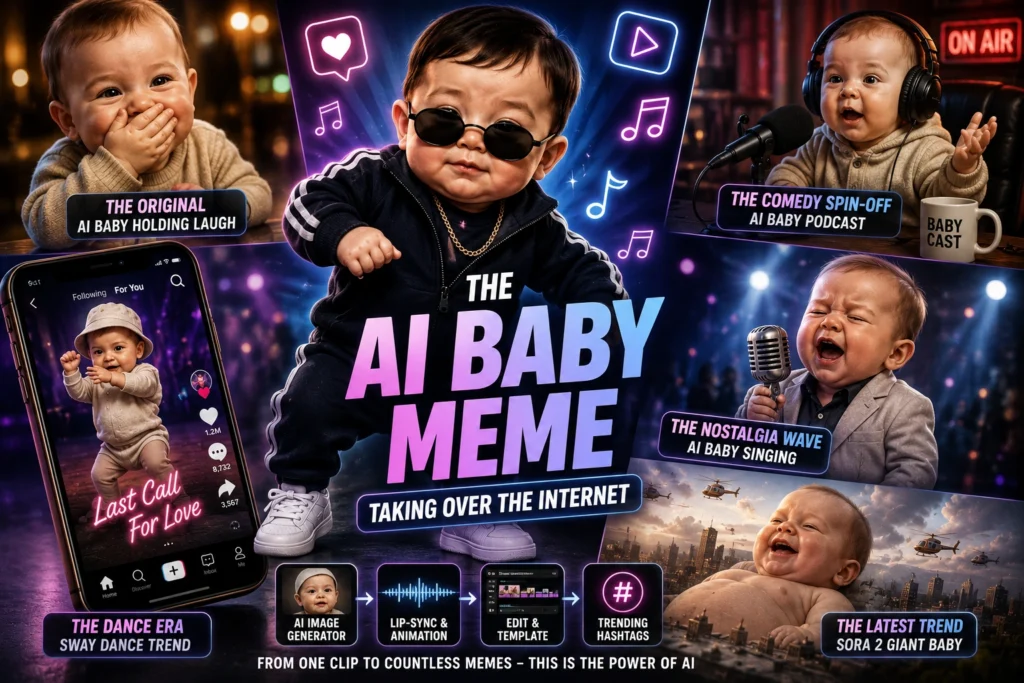
The trend traces back to November 2025, when an image of a baby created by artist Dallas Rayburn was rotoscoped onto a video of Chinese influencer Xiucai lip-dubbing the song “Sweet Love.” <cite index=”4-1″>The edit showed the baby casually approaching the camera and covering its mouth as if hiding a smile before singing</cite>, and it quickly picked up nicknames like Niche Baby, Baby Covering Mouth, and Tuff Baby as it spread from Instagram Reels to TikTok and X. You can read a fuller breakdown of this origin story on Know Your Meme’s AI Baby Holding Laugh entry.
The Dance Era: Sway Dance / AI Baby Dance Trend
By late December 2025 and early January 2026, the format shifted from lip-dubbing to full-body dancing. <cite index=”2-1″>The Sway Dance trend, also called the AI Baby Dance Trend or Last Call for Love Dance, spread online set to an AI-generated song of the same name</cite>. Parents started uploading AI-animated versions of their own kids dancing, while other creators used the same effect on pets, cartoon characters, and even themselves — often joking about how their real-life moves compared to the AI baby’s. More details on how this specific wave spread are documented on Know Your Meme’s AI Baby Dance Trend page.
The Nostalgia Wave: AI Baby Singing / Hachimi Chimichi Mambo
April 2026 brought a fresh mutation: AI-generated baby characters singing over nostalgic, emotionally heavy music. <cite index=”1-1″>This version blends AI baby-style characters with throwback songs to create a surreal mix of cuteness and nostalgia, leaning heavily into “brainrot” internet culture</cite>. Interestingly, not everyone loved it — <cite index=”1-1″>plenty of viewers pushed back hard on the trend, with some calling it one of the most annoying memes of the year</cite>, which is a good reminder that virality and popularity aren’t always the same thing.
The Comedy Spin-Off: AI Baby Podcast
Perhaps the most creative offshoot is the AI baby podcast trend, where two animated baby avatars reenact real comedy podcast clips or absurd debates. One widely shared example reimagined a segment from the comedy podcast Bad Friends, with baby avatars deadpanning the original hosts’ banter. <cite index=”9-1″>The clip alone pulled in hundreds of thousands of likes and shares</cite>, showing just how much traction this format has with audiences who already know the source audio.
The Sora 2 Giant Baby Trend
Most recently, OpenAI’s Sora 2 has pushed the meme into a new visual direction entirely. <cite index=”8-1″>Creators are now generating hyper-realistic clips of an enormous baby lying in bed, babbling and shaking the room with every giggle</cite>, using nothing but a text prompt. It’s a good example of how quickly meme formats evolve once a more powerful generation tool becomes available — you can see what Sora 2 is officially capable of on OpenAI’s Sora page.
How Creators Are Making These Videos
Most AI baby content relies on a small toolkit:
- Image generators like Midjourney or DALL-E for creating the base baby character or “baby-fied” version of a real person.
- Lip-sync and animation apps such as Viggle AI, CapCut templates, or dedicated lip-sync tools that map mouth movements to an audio track.
- Text-to-video generators like Sora 2 or Kling AI, which can produce full scenes from a written prompt without needing a source photo at all.
- Editing apps like CapCut, which package a specific effect (a dance move, a rotoscoped mouth-cover gesture, a music cue) into a reusable template anyone can drop their own footage or photo into.
Basic Workflow for a Dance or Lip-Sync Style Video
- Choose or generate a baby image (or use your own baby/pet/friend’s photo).
- Pick a trending audio clip — usually a nostalgic song, viral dance track, or recognizable podcast snippet.
- Run the image and audio through an animation or lip-sync tool.
- Apply a CapCut or similar template that matches the trend format.
- Add trend-relevant hashtags so the algorithm can match it to people already engaging with the format.
Benefits and Appeal of the Trend
- Low barrier to entry: many templates need just one photo and a few taps.
- High shareability: the humor is instantly recognizable even without context.
- Nostalgia + novelty combo: pairing throwback music with cutting-edge AI creates an emotional hook that plain AI content often lacks.
- Community remix culture: because the format is so flexible, creators constantly one-up each other with new music, characters, and edits, keeping the trend alive far longer than a typical meme cycle.
Common Mistakes Creators Make
- Ignoring copyright: using podcast audio, movie clips, or copyrighted songs without permission can lead to takedowns or account strikes.
- Overusing the same template: audiences tire of identical formats quickly; small twists (different music, different character, unexpected pairing) perform better than straight copies.
- Skipping captions or context: a lot of the humor lands because of the caption or hashtag pairing, not just the video itself.
- Not considering the “creepy factor”: some viewers find hyper-realistic AI baby content unsettling rather than funny, so tone matters a lot for how a clip is received.
Best Practices If You Want to Try It
- Start with a short, well-known audio clip — recognizability drives shares.
- Keep clips under 15–20 seconds; most viral versions are short and loop well.
- Test a few animation tools since output quality varies a lot between apps.
- Read the terms of service for any AI video tool before uploading real photos of children, since privacy and consent are genuine concerns raised around this trend.
Personal Experience Section
I spent a weekend testing a handful of these trends firsthand, mostly out of curiosity about how easy the tools actually are. A few honest takeaways:
- The learning curve is smaller than expected. Most CapCut-style templates really do work in one or two taps once you have the right photo and audio lined up. The hardest part wasn’t the tech — it was picking audio that actually matched the vibe of the trend.
- Not every result is flattering. Several lip-sync outputs looked slightly off around the mouth and jaw, which is honestly part of the appeal — the “uncanny valley” wobble is what makes it funny rather than just impressive.
- Engagement really does depend on timing. A clip I posted during the early wave of a specific sub-trend got noticeably more traction than the same style of video posted a week later, once the format had already peaked.
- Comment sections are split. For every person laughing, there was someone in the replies expressing discomfort with how realistic some of these AI baby clips have become, especially the Sora 2-generated ones. That pushback is worth taking seriously, not just brushing off as trend fatigue.
- Simpler edits aged better. The earliest, lower-effort versions of a trend (like a baby just dancing to a fun song) held up better over time than the more elaborate, hyper-realistic ones, which started feeling stale — or even a little unsettling — once the novelty wore off.
If you’re experimenting yourself, my honest advice is to keep it light, avoid anything that could be read as mocking real children, and don’t force a trend past its natural shelf life.
Frequently Asked Questions
1. What is the AI baby meme?
It’s a broad term for a group of viral trends where AI tools animate, lip-sync, or generate baby characters doing things real babies wouldn’t normally do, like dancing, singing, or hosting podcasts.
2. Where did the AI baby meme originate?
The earliest version traces back to a November 2025 video that rotoscoped a baby image onto an adult influencer’s lip-dub of a Chinese pop song, which then spread across Instagram, TikTok, and X.
3. What app do people use to make AI baby dance videos?
Popular options include CapCut templates, Viggle AI for motion animation, and Kling AI or Sora 2 for full text-to-video generation.
4. Is the AI baby meme real footage of a baby?
No. Most versions are either rotoscoped edits placing a baby’s face over an adult’s body movements, or fully AI-generated characters and videos created from prompts.
5. Why do people find the AI baby meme funny?
The humor mostly comes from the contrast between an innocent-looking baby and adult behavior, dramatic music, or grown-up conversations, plus the slightly uncanny quality of the AI animation itself.
6. Is the AI baby meme trend controversial?
Yes, to an extent. Some viewers and commentators have raised concerns about realism, consent, and the ethics of generating lifelike depictions of children, especially as tools like Sora 2 make the results more convincing.
7. Can I use my own baby’s photo for these trends?
Technically yes, but it’s worth thinking carefully about privacy before uploading real photos of children to any AI tool, and checking that tool’s data and content policies first.
8. What’s the difference between AI Baby Dance and AI Baby Podcast trends?
The dance trend focuses on animated movement set to music, while the podcast trend uses lip-synced baby avatars to reenact real comedy or debate audio clips.
9. Is the AI baby meme still popular in 2026?
It’s evolved rather than faded — new sub-trends keep appearing every few months, from dancing and singing formats to podcast parodies and Sora 2-generated giant baby clips.
10. Are there copyright risks with AI baby meme videos?
Yes. Many popular clips use copyrighted music or podcast audio without licensing, which can result in content takedowns or platform strikes for creators.
Conclusion
The AI baby meme is a good case study in how fast internet culture moves once a flexible AI format catches on. What began as one rotoscoped clip has splintered into dance challenges, nostalgic singing edits, comedy podcast parodies, and now hyper-realistic Sora 2 experiments — each wave riding on the last one’s momentum while adding its own twist. If you want to join in, keep your edits short, pick recognizable audio, respect copyright and privacy boundaries, and don’t be surprised if the trend looks completely different again in a few months. That constant reinvention is exactly why it’s stuck around this long.
For more engaging and informative AI content, visit AISofting
Disclaimer: This article reflects publicly available information and trend observations as of mid-2026. Meme trends, associated apps, and platform policies change quickly, so details like tool names, virality figures, and specific video counts may shift after publication. Always review a platform’s and AI tool’s current terms of service before uploading personal or child-related photos and videos.